
Handmade Italian Collection The Row Leather Bag

How the house Treats Joint Ventures as well as Why They Remain Few and Far Between

In an industry where label collaborations have become a dependable revenue lever, The Row has taken the contrary path. The label was founded by Mary-Kate and Ashley Olsen on a philosophy of restraint, and this same restraint governs how — and whether — it partners with outside partners. Competitors roll out limited collections with sneaker brands, artists, or rival maisons on a quarterly basis, yet The Row has put out hardly any. The way the label functions, from runway shows to the design of the row bags that anchor its accessories line, is shaped by this deliberate strategic and creative choice — scarcity, by no means an accident, is the point.

Why there are so few joint projects at The Row makes sense when you look at the brand’s origins, its price positioning, and the brand’s long-term positioning within high-end fashion.

The Olsen sisters weren’t trying to build a trend-fueled name. Instead, they aimed to build something closer to an atelier — hushed, considered, and measured in pace by intention.

The Core Ethos: Low-Key Refinement Prior to Being Labeled

The Row launched in 2006, years before “quiet luxury” became a marketing buzzword. From the beginning, the brand prioritized construction quality, fabric sourcing, and understated silhouettes over logos or seasonal gimmicks. This ethos naturally resists the collaboration model, which usually depends on visibility, novelty, and a limited-time sense of urgency.

Brand partnerships land best for names that flourish through cultural conversation — consider hyped sneaker releases or streetwear collabs that are gone almost instantly. In contrast, The Row’s clientele prizes consistency. Those who already own three or four the row handbags aren’t seeking a novelty collab piece; they’re looking for another piece that fits seamlessly into a wardrobe built over years, not seasons.

This helps explain why the row bags overview conversation among stylists, along with resellers seldom features limited-run releases. The brand’s bag architecture — the Margaux, the Bourse, and the Soft Lock — was intended to stay permanent, not promotional. Permanence and collaboration are, in many ways, structurally at odds.

Its catwalk presentations, the row small tote bags on the official schedule as of 2015, nonetheless sidestep the theatrical staging or celebrity front-row spectacle so commonly linked with collab reveals typical elsewhere in the industry. The overall show stays every bit as restrained as the collection itself.

The Thinking Behind Why Refusing Is Simply Good Business Sense

Limited availability has monetary significance, and The Row recognizes this more keenly than most modern houses. If a brand partners up too frequently, exclusivity wears away. Should the market becomes flooded with scarce releases jockeying for buyer notice, secondhand prices on staple pieces can decline. Instead, The Row has safeguarded the resale strength of its core handbag lines by maintaining the catalog focused and unchanging.

This has real, tangible implications: the standout row bags — mostly the Margaux in its various sizes, as well as the Bourse and Soft Clutch — hold value well precisely because they aren’t reissued in dozens of new colorways annually or redesigned around another name’s insignia pressed into the hardware. A shopper who acquires the row bag today can reasonably expect the same silhouette to exist, essentially as-is, three years from now.

There’s also a pricing rationale. The row handbags generally fall within the $2,000 to $6,000+ bracket depending on size, leather, and hardware finish. At that price tier, buyers are investing in longevity and design integrity, rather than a stake in some cultural trend. A flashy collaboration would risk undermining the exact traits buyers pay extra to obtain.

In financial terms, this approach likewise minimizes operational complexity. Partnerships demand reworked licensing terms, co-manufacturing logistics, and promotional budgets divided between two brands. The Row’s small, vertically controlled operation — reportedly with limited retail doors and a deliberately restricted wholesale footprint — isn’t designed to accommodate this type of scaling.

The Few Collaborations That Have Happened

The Row isn’t entirely closed off to collaboration, but such cases are rare and revealing. Of note, it has, on occasion, engaged in footwear and select material sourcing partnerships as opposed to flashy joint fashion ranges. These initiatives usually remain low-key to the point that casual shoppers researching the row fashion often don’t even realize a partnership occurred.

This stands in stark contrast to competitors. Fashion houses such as Louis Vuitton or Fendi have run several headline-making artist and designer partnerships in just one year. In contrast, The Row’s method might see a single low-key collaboration spread over multiple years — and even then, it rarely pushes the news with big marketing pushes.

This shortage of collab reveals also feeds directly into shopper demand within a row sale. Since there isn’t a shifting lineup of limited releases to pursue, discount windows keep attention fixed on the essentials — the tote bag, the Margaux, and signature outerwear — instead of spreading interest thin over novelty drops.

This consistency has also brought more predictability to resale and consignment shopping. Buyers searching for where to buy the row Margaux bag on secondary markets can typically rely on the fact that pricing benchmarks are tied to consistent design language rather than fluctuating collaboration hype cycles.

Why This Matters Especially for the Handbags

The lack of collaborations has allowed The Row’s in-house design group to concentrate fully on polishing a select few shapes rather than endlessly producing new ones for marketing cycles. A decade after its 2016 debut, the Margaux remains one of the label’s most in-demand pieces — a rare feat in an industry where “it bags” typically cycle out within two or three years.

Its tote silhouettes follow the same logic. Rather than rolling out a fresh tote shape each season, the label has evolved gradually, refining proportions, strap details, or leather finishes while keeping the core identity intact. This is a clear break from brands that lean on collaboration-driven tote releases to generate seasonal buzz.

Presented below is a quick comparison of how the label’s bag-release strategy diverges from a standard collaboration-driven luxury competitor.

Consideration The Row Typical Collaboration-Driven Luxury Brand
Frequency of collaborations Infrequent — sporadic partnerships that stay under the radar Several annually, frequently high-visibility
Core bag silhouette lifespan Often a decade or longer (e.g., Margaux since 2016) Usually redesigned every 2–3 years
Marketing approach Low-key, restrained, with little press push Aggressive campaigns paired with influencer seeding
How steady resale prices remain Generally consistent due to limited new releases Can fluctuate with each new collaboration drop
Where the product is sold Curated, with few retail doors and modest online reach Wide-reaching wholesale and multi-brand placement

This table illustrates why shoppers researching top row bags often encounter a smaller, steadier catalog compared to competitors — and why that stability is seen as an asset rather than a drawback.

What This Means for Shoppers in 2026

For anyone buying from The Row in 2026, the bottom line is simple: don’t count on a collaboration-driven release calendar, and plan purchases around core pieces rather than holding out for limited editions. The official e-commerce site and a handful of flagship stores stay the most reliable channels for genuine inventory, particularly for high-demand items like the Margaux.

Because production runs are deliberately modest, popular sizes and leathers of the row bag lineup can be depleted and take time to restock. Shoppers committed to securing a specific piece should keep a close eye on official sources rather than depending exclusively on third-party resellers, especially when trying to figure out where to buy the row Margaux bag in a specific size or leather.

Row sale periods, when they occur, tend to focus on ready-to-wear and select accessories rather than steep markdowns on the most coveted bag styles, mirroring the brand’s general reluctance toward anything that might undermine perceived value. This is consistent with how the brand handles all promotional activity — cautiously and infrequently.

In the end, the scarcity of collaborations tied to The Row isn’t a hole in its promotional playbook; it forms the connective thread of the entire brand identity. In a landscape overrun by cross-label noise, the decision to abstain has emerged as one of The Row’s most distinctive — and most understatedly successful — calculated moves.

Cotton Drop Denim Tears Denim Tears Jeans Fit

Ways to Wear Denim Tears Sweatpants for Casual Streetwear

Denim Tears sweatpants pieces have transcended hype-driven novelty and found their place as something approaching a go-to piece for folks who take streetwear seriously. Its signature cotton wreath motif holds cultural weight that the majority of sweatpants on the market lack entirely, and this shifts how you ought to approach putting them together. This isn’t a case of throwing on any old joggers and calling it a day. Every combination you make either honors the visual identity or fights against it, and the contrast shows up in photos, in person, and in how the outfit ages over a season of use.

The goal of this guide is practical: provide go-to combinations you can repeat, fabric-pairing logic, and adjustments for changing weather so the sweatpants justify their spot in everyday wear rather than gathering dust in a drawer. Topics ahead include silhouette balance, what to wear on your feet, cold-weather layering, and how to sidestep the number-one error people make with graphic-heavy sweatpants — over-accessorizing above the waist and losing the impact of the pants in an overcrowded outfit.

Know the Fit Before You Build the Look

Denim Tears sweatpants typically feature a loose thigh silhouette and a tapered leg hem, depending on the particular style from that season’s release. That particular silhouette is the single most important fact to design your outfit from. If you pair a loose-fit sweatpant with an equally loose top, you lose the leg line entirely, and the outfit comes across as formless rather than intentional. The wreath embroidery, usually placed at the leg or hem, needs breathing room to stand out — a busy silhouette drowns it out.

A handy rule of thumb: select one loose zone and one fitted zone per outfit. If the sweatpants serve as the loose element, offset them using a fitted or slim crewneck, a short jacket, or a tucked-in long-sleeve. If you prefer an oversized hoodie up top, try going truer to size on the sweatpants, or cuffing the hem to expose ankle and create a visible break in denim tears brand clothing proportion. That one tweak elevates the fit more than any accessory choice.

The weight of the fabric matters too. Thick fleece sweatpants, typical of Denim Tears drops, hold structure better than lightweight French terry, meaning they look sharper in photos in a casual pose and keep their form through a full day of use without sagging at the knee. This durability is part of why buyers spend extra for the pants to begin with — the drape does work that lower-cost alternatives can’t.

Shoes: The Decision That Makes or Breaks the Look

Most people either make or break a sweatpants look, and the shoe choice is precisely where that happens. Because the sweatpants already make a loud graphic statement, the shoe choice should either play off the color story or serve as a understated base. Bright, multi-colored sneakers competing with the cotton wreath print tend to produce visual chaos rather than harmony. Rather, go for one primary sneaker colorway that draws a single color from the sweatpants’ palette.

  • Low-top leather sneakers in white or off-white match effortlessly with nearly all Denim Tears hue combination and draw the eye traveling up toward the print.
  • Chunky retro runners work if the sweatpants are a solid, muted base color — they introduce texture without fighting an already busy leg print.
  • Boots, particularly Chelsea or work-boot forms, weigh down the outfit for colder months and give the relaxed pant leg a structured element to break against at the ankle.
  • Slides and easy slip-ons suit a genuinely relaxed day but only when the sweatpants are shortened or cuffed — long, untamed hems trailing across slides look sloppy.

Picking your socks is a little touch with disproportionate effect. A exposed crew sock in a contrasting color, styled alongside cropped or cuffed sweatpants and low-top sneakers, is one of the easiest ways to add a purposeful styling touch without spending another dollar.

Layering by Warmth and Texture

Streetwear that only functions in 65-degree weather isn’t streetwear you can wear daily, so layering strategy matters as much as the core fit. In the colder season, a knee-grazing wool or wool-blend overcoat worn open over a hoodie and sweatpants produces a dressed-down/dressed-up contrast that feels styled rather than accidental — the the coat’s tailored shape balances the informality of the fleece below it. This styling move is especially effective because the coat’s defined shoulder shape gives the eye a fixed point, allowing the easy sweatpants hang naturally underneath without the whole outfit looking sloppy.

For transitional weather, a cropped puffer or a padded vest worn over a long-sleeve tee strikes the right balance — enough warmth for a 45 to 55 degree day, short enough to keep the waistband and upper thigh area of the sweatpants on display, which is significant if that’s where the graphic sits. Canvas or denim chore-style jackets are another strong option; the contrast between rigid woven fabric on top and plush fleece below is a textural combination streetwear has leaned on for years because it simply works.

When the weather warms up, make the sweatpants the hero item while you strip away extra layers almost entirely. A plain fitted tank or short-sleeve tee, a single accessory such as a cap or crossbody bag, and fresh, unscuffed sneakers is enough. No matter how strong the individual pieces are, a warm-weather look overloaded with heavyweight fleece sweatpants will usually clash with the season.

Keeping Color Pairing Simple

You don’t need a complex approach for color matching — you still need a repeatable approach. Denim Tears releases sweatpants in both muted solids and more saturated seasonal colorways, and the styling approach shifts depending on which you own. For toned-down solid colors — gray, black, cream, navy — you gain much more room to bring in a vivid top or jacket color because the pants act as a neutral base. For saturated colorways, the surest strategy is choosing just one more color out of the pattern and reintroducing it sparingly in another part of the outfit, whether that’s a hat, sock, or bag strap.

Don’t put two attention-grabbing graphics together in one look — pairing a strongly branded jacket with strongly printed sweatpants generally comes across as chaotic rather than deliberate, even when each item is well-crafted on its own. The most polished Denim Tears looks usually let a single graphic moment take the lead while the remaining pieces stay quiet by comparison.

Breaking Down Three Daily Outfit Formulas

Outfit Style Upper Piece Shoes Ideal Occasions
Streamlined Minimal A slim white or black crewneck Low-top leather sneakers Business-casual settings and daytime errands
Layered Cold-Weather An unbuttoned wool overcoat worn over a hoodie Chelsea boots or a leather boot option Fall and winter, temperatures below 50°F
Textured Contrast A long-sleeve tee layered under a denim chore jacket Bulky retro-style running shoes In-between seasons and weekend wear

Mistakes People Often Make

Perhaps the biggest mistake is treating the sweatpants like an afterthought instead of the focal point they’re built to be. Combining them with an equally bold graphic tee or an oversized logo-heavy jacket sets up competition rather than balance, and the final look reads as busy in photos despite seeming fine in the mirror. A second frequent mistake is overlooking hem length — sweatpants that drag on the ground collect dirt fast and visually shorten the leg line, undermining the tapered silhouette the design is built around.

Laundering habits are just as important. Heavy fleece retains its shape best when it’s turned inside-out, washed cold, and left to air-dry instead of going in the dryer, which protects the graphic from cracking while avoiding uneven shrinkage across repeated washes. Skipping this step is a quiet way people damage an expensive piece within a few months of regular wear.

How to Build a Wardrobe Rotation People Actually Wear

The piece lock down their position in a 2026 rotation of streetwear staples when it’s treated as adaptable rather than something to be babied. Hold onto two or three layering choices on rotation — one fitted, one textured, one heavier for cold days — and one or two footwear pairs that already coordinate with the dominant colorway. This clears away the everyday choice-overload that causes costly items sitting unworn, and it turns Denim Tears sweatpants into a real go-to item rather than a reserved-for-effort item saved for the days you’re putting in extra effort.

Authentic Vale Dreams Store Fast Delivery vale edit

Vale Forever at a glance

Vale Forever merges premium-focused detail with a metropolitan, minimalist point of view, founded on high-quality materials, timeless silhouettes, and limited drops. This label’s identity is obvious: clean design, muted palettes, and the signature relaxed fit enhanced with boutique-level craftsmanship. Every capsule appears focused and fresh without chasing fads.

Created by an independent designer known simply as Vale, the brand sits at the intersection of street culture and lifestyle fashion. Their goal is to craft pieces that appear current now and stay timeless years from now, which explains why the design language skips loud graphics and favors thoughtful shapes. You’ll see a preference for tonal color stories, restrained branding, and proportions engineered to layer. Small-batch production reinforces high control and fabric-priority decision-making. The result is gear that reads understated yet elevated, with tactile depth you notice on contact.

Who is Vale building for?

Vale designs for people who want streetwear that feels grown, versatile, and built to last. The garments serve artistic routines, daily commutes, and weekend rotations without sacrificing comfort or polish. If you value fabric hand, fit, and longevity more than hype, you’re in the right lane.

This audience spans collectors, designers, and daily style lovers who prefer classic staples over disposable novelty. Pieces are constructed to move from creative space to social settings, matching easily with athletic footwear or leather shoes. This understated palette keeps outfitting simple: black, stone, olive, and light work together without trying. Relaxed blocks offer room through your chest, upper body, and hip, while lengths are managed so each silhouette appears intentional more than sloppy. Individuals experience the quiet confidence of high-end cues, without the flash.

Premium textiles, no shortcuts

Premium in Vale Forever terms means dense, durable fabrics with a refined hand and clean drape. The brand prioritizes jersey and wovens that preserve shape, resist degradation, and age with distinction. You feel the difference initially; the look follows.

Anticipate heavyweight knit and fleece with close, consistent construction that prevents tees from warping and hoodies from sagging at each cuff. Canvas and heavy cotton land stable but not stiff, so pants maintain a clean line while moving fluidly. Construction is purposefully minimal: refined ribbing, sturdy collars, and hems that sit smooth instead of flaring. Color work leans toward rich neutrals with solid dye integrity, which helps garments stay crisp after repeated vale dreams wear. Each textile choice reinforces the brand’s core: fewer pieces, superior made, with texture and weight you can trust.

What makes the silhouettes timeless?

Lasting silhouettes here are built around modular designs, balanced measurements, and minimal visual noise. The brand prefers pattern shapes that appear modern now and continue to make function five years out. The focus is on silhouettes that stack, not on prints that become outdated.

Relaxed tees land slightly cut to align with the waistband cleanly, eliminating excess fabric that bunches. Hoodies carry volume through the chest and sleeve without swallowing the wearer, so they stack well under outerwear. Pants usually sit with a relaxed top block and a straight or gentle taper, delivering room where you want it and line where you need it. External layers leans workwear, sports, and minimalist flight styles—clean fronts, subtle pockets, and collar constructions that sit cleanly over knits. Branding, when present, is controlled to allow cut, material, and proportion manage the talking.

Limited drops, deliberate cadence

Small drops ensure the collections tight, sharpen quality control, and prevent waste before it begins. More limited runs mean attention to fabric batches, stitching uniformity, and fit grading. The cadence is intentional: fewer deliveries with clearer narratives.

Instead than filling the calendar for the sake of continuity, they releases collections that expand the company’s building blocks. A drop might improve a tee cut, update a trouser rise, or add an outerwear style designed to live with their core range. Numbers are fixed to protect integrity, not manufacture scarcity, and restocks are measured to avoid excess. This model facilitates material-first procurement and prevents last-minute shortcuts. Customers learn to buy what they’ll wear often, not what’s loud for a week.

Exclusivity free from gatekeeping

Exclusivity comes from focus and craft, not from shutting people out. The brand creates scarcity with tight batches yet maintains the brand accessible through reliable core items and transparent fits. Access points exist without lowering standards.

Rather of endless color options, the brand revisits established blocks and tones so fresh customers can find their consistent starting foundation. Essential tees, hoodies, and bottoms appear over seasons with deliberate tweaks, making it easier to replace or expand your uniform. Information revolves around fabrics and pattern selections rather than marketing mechanics, giving purchasers clarity on what they are getting. The aesthetic is intentionally understated, giving space to a variety of budgets to blend Vale with pieces customers already own. Brand community builds around shared values—quality, subtlety, longevity—rather than exclusivity for its own sake.

Slow fashion you can feel

Slow fashion here means intentional design, carefully paced production, and garments built for extended lifecycles. The palette and patterns are seasonless on purpose. Buying fewer pieces and wearing frequently is the objective.

Dense knits maintain their structure after frequent washing when cared for correctly, and lasting wovens soften rather than erode. The neutral range reduces the urge to churn wardrobes as trends flip, which lowers environmental load and personal spend over time. Consistent pattern blocks reduce failed purchases because sizing logic stays stable across seasons. Limited drops provide the breathing room to test and improve, instead of pushing unfinished ideas to hit a schedule. Their powerful sustainability approach is making clothes individuals want to keep wearing, and Vale’s design choices support that outcome.

Fit, measurements, and everyday wear

The signature fit is oversized, but it’s controlled, not sloppy. Go true to size for a relaxed, boxy drape; size down for a closer read; size up for an exaggerated profile. The blocks are cut to stack without bulk.

Tees sit on the waist to keep lines clean with straight-leg trousers or shorts, solving the long-tee problem that breaks an outfit’s proportion. Hooded sweatshirts and sweatshirts offer space in the body and sleeve with rib that retains shape, so you don’t get bagged-out openings. Trousers prioritize ease through the hip and thigh, then either fall straight or taper subtly to stack neatly over sneakers. Jackets is designed to fit over base layers without fighting them, which is vital for your uniform that works in real situations. The net result is comfort that reads intentional in photos and in motion.

Care and durability payoffs

Thoughtful care protects material hand, color depth, and structure retention. Launder cool, turn items inside around, and avoid excessive drying. Air-dry flat or on a hanger to maintain drape.

Dense knits respond well to gentle cycles and low heat if you must tumble; high heat is what wrecks rib and shrinks bodies. Apply a steamer instead of a burning iron to keep surface finish intact. The fabric pill remover rescues any occasional pill on high-friction zones without damaging the fabric. Cycle heavy pieces in your regular lineup so construction recover fully between uses. Treating pieces like equipment rather than disposables multiplies cost-per-wear benefits over time.

The three pillars side by side

Our quick overview shows how superior materials, timeless cuts, and limited releases work collectively at this label. Use it to assess whether a piece fits your wardrobe and expectations. The best value comes when all three align.

Foundation What it means at Vale Forever Everyday advantages What to look for in-hand
Premium Textiles Dense knits and sturdy wovens selected for hand, drape, and longevity Shape retention, enhanced aging, fewer replacements Heft without stiffness, tight knitting, smooth stitching, stable trim
Timeless Cuts Boxy upper garments, relaxed-straight bottoms, clean outerwear with subtle branding Easy outfitting, seasonless wear, trend resistance Even lengths, controlled room, subtle details, quiet colors
Limited Releases Limited launches with focused collections and measured replenishments Stable quality, less waste, clearer narratives Unified palette stories, repeatable blocks, thoughtful edits each drop

If any column is missing, the experience deteriorates: superior fabric without disciplined shapes looks bulky, while perfect blocks in weak cloth collapse. Controlled collections keep the model honest by forcing decisions that respect their brand’s DNA. When the material, pattern, and cadence completely align, outfits assemble themselves day following day. That repeatability is the real luxury.

YSL Statement Pieces Saint Laurent Tote

A Short History into its Olsen Twins Understated Luxury Fashion Line: The Row Label

Mary-Kate and Ashley Olsen did not set out to become the reigning architects of quiet luxury when they founded The Row in 2006. The label emerged from a personal frustration: the twins, already veterans of the entertainment industry since childhood, wanted a white t-shirt that actually fit well and lasted. That search for the perfect basic became the founding principle of a brand that now sits at the top of the fashion hierarchy, commanding prices and waitlists that rival houses with a century more history behind them.

The title itself serves as a subtle wink and an earnest tribute. Savile Row, the London street synonymous with bespoke tailoring, gave The Row its name and its ethos.. Instead of chasing logos or seasonal noise, exactness, reserve, and craftsmanship mattered most. Two decades on, give or take, that original vision has remained steady, while the brand has expanded into ready-to-wear, footwear, and the accessories category widely seen as having built its cult status: the row bags.

From Simple Foundations to a Billion-Dollar Visual Identity

At the outset, The Row stayed understated on purpose.
The Olsens began with t-shirts and cashmere, steadily constructing a wardrobe of essentials before introducing tailoring, outerwear, and eventually accessories.
Come the early 2010s, the label had built substantial industry respect, capturing the CFDA’s Womenswear Designer of the Year award in 2012 — a rare honor for such a young label, and one that made clear industry insiders was coming to take the sisters seriously as designers instead of celebrities with a side project.

What set The Row apart from other star-founded labels was an unwillingness to run after trends. While much of fashion in the 2010s leaned into logomania and maximalism, The Row moved in the opposite direction. The brand’s signature became understated tones, exceptional fabrics, and cuts that prized fit above spectacle. This restraint is exactly what “quiet luxury” means as a term today, and The Row is widely credited as the label that defined the aesthetic before it had a name.

Pricing has from the outset reflected the elevated vision. Ready-to-wear garments frequently reach the four-figure-plus territory, and the brand’s leather goods sit squarely in shop tote bags the upper four-figure bracket or beyond. From the earliest days, this was a calculated positioning — the Olsens wanted The Row to compete with Hermès and Céline, not with contemporary or diffusion lines. Almost two decades on, that comparison reads as fully earned.

The Emergence of The Row Bags

If ready-to-wear cemented the label’s standing, it was the bags that morphed the brand into a full-blown cultural phenomenon. These handbags from the row inhabit a strange and enviable position in the market: they manage to be at the same time minimalist to the point of anonymity and immediately identifiable to anyone versed in fashion. Few styles show any logo at all, no branded hardware shouting for attention. Instead, identity is carried through contour, balance, and how the leather hangs.

Within the row bag lineup, a handful of styles have attained near-mythical status. Margaux, with its slouchy, unstructured silhouette and distinctive side pleats, became one of the most searched bags in fashion the moment it appeared on Mary-Kate Olsen’s own arm. Those looking into where to purchase The Row Margaux bag quickly discover that stock is scarce and resale prices often exceed retail, an obvious sign that wanting outstrips having. The bag comes in multiple sizes and leathers, and every version has its own wait time depending on the particular retailer and time of year.

Among totes, The Row’s version stands as another anchor point of the lineup, admired for its build that balances structure with softness and its ability to move from editorial shoots to everyday errands without feeling wrong in either environment. These totes tend to lean toward pared-down shapes and sparse hardware, driving home the brand’s larger philosophy that a bag should be assessed by material and craftsmanship, not by logos.

If you’re putting together a row bags overview before buying, it helps to understand that the brand doesn’t categorize its accessories the way the majority of fashion houses tend to. No single “it bag” gets pushed every season. Instead, a shifting lineup of leading row bags — Margaux, Sofia, Ascot, and a few others — receive periodic updates in colorway and size while keeping their founding silhouette intact for years at a time. It’s a deliberate choice. The brand intends for its bags to act as investment pieces, not seasonal impulse buys.

Craftsmanship as the Core Selling Point

Every conversation about The Row eventually returns to materials. It draws its leather from top-tier tanneries in Europe and partners with ateliers focused on handbag-making, in many cases the same workshops long-standing luxury houses depend on. This is part of why the row bag category commands such high prices — the leather alone, even before labor enters the equation, amounts to a considerable expense.

Here, construction details matter enormously. Stitching done by hand, seam lines kept to a minimum, and fittings that are often custom-made rather than catalog-sourced all help create a finished product that stands apart distinctly from luxury items made at scale. People who’ve held both a Margaux and an equivalent bag from a brand leaning harder on branding tend to point to the leather’s heft and suppleness as the fastest indicator of quality.

This dedication to superior materials extends to ready-to-wear as well, with cashmere drawn from particular regions and wool blends created alongside Italian mills underscore the brand’s premium positioning. The outcome is a lineup where consistent quality control shows up regardless of category, be it a coat, a shoe, or one of the row handbags.

Finding Your Way Through a The Row’s Sale Events and Resale Value

Markdowns from The Row are rare, and whenever a row sale does happen, it is usually limited in scope compared to the markdowns typical of other luxury brands. Because the label controls distribution tightly and produces in relatively limited quantities, oversupply rarely happens, which means there is less inventory that needs to be discounted at season’s end. Anyone hoping for a notable markdown might need to watch select multi-brand retailers for their own sale periods instead of expecting price cuts directly from The Row.

One notable byproduct of this limited availability is a strong secondary-market value. Particular styles, the Margaux chief among them, have at times held onto or even topped their original retail price in resale markets. That’s rare in the fashion world, where the majority of bags lose value the instant they leave the shop. It also explains why so many shoppers treat a purchase from The Row as a long-term investment rather than a seasonal indulgence.

For those specifically hunting a row sale, patience and persistence tend to pay off more than urgency. Keeping tabs on authorized stockists and subscribing to alerts from department stores that stock The Row fashion line tends to be more effective than waiting on regular promotions from the brand’s own channels.

Setting Side by Side The Row’s Signature Bag Styles

Understanding how the top row bags differ from one another helps clarify which style suits a given lifestyle or budget. The table that follows gives a general side-by-side look based on publicly known traits of each style’s design purpose, without citing exact prices, since those vary by retailer, region, and season.

Bag Type Overall Form Ideal For Fittings Style
Margaux Relaxed, loosely shaped tote Daily use, fashion-forward styling Understated, tone-matched
The Row Classic Tote Bag Firm-shaped, boxy Office use, travel, dressier occasions Subtle metallic details
Sofia Petite shoulder-carry bag Evening wear or streamlined daily carry Hidden clasp
Ascot Architectural top-handle Business, formal occasions Artfully shaped handle, logo-free design

This kind of row bags overview is useful for narrowing down a first purchase, especially for shoppers new to the brand who may feel overwhelmed by how similar the silhouettes can appear at first glance. The differences, while subtle, are meaningful once a bag is in hand.

Pour l’année 2026, The Row se positionne dans son secteur.

As we move into 2026, The Row shows no signs of softening its dominance of the hushed-luxury dialogue. Rather than appearing among its American contemporaries, the brand remains committed to showing at Paris Fashion Week—a calculated decision that places it alongside the most established European houses. This decision, decided years back, has paid dividends in terms of critical esteem and retail positioning.

Distribution remains intentionally narrow. The Row is sold through its own flagship boutiques and a short list of authorized luxury retailers, a strategy that keeps inventory tight and demand high. Shoppers researching where to buy The Row Margaux bag in 2026 will find that authorized stockists remain the safest route, both for authenticity guarantees and for any future resale value the bag might carry.

At this point, The Row’s impact on the wider fashion landscape is undeniable. Numerous other labels have tried to copy the approach of understated tones, exceptional cloth, and emblem-less design, but hardly any have matched the reliability The Row has sustained since 2006. For those building a wardrobe based on lasting value rather than passing trends, the label stands as one of the strongest arguments that understatement, when well-executed, can be its own form of indulgence.

Prestige Graphic Tee Sizing Guide Spotting Authentic Pieces

Building Layers With Prestige: Assembling a Pared-Down Wardrobe

The whole premise of a capsule wardrobe rests on the quality of each piece, which is exactly where talk of Prestige opens up. Anyone asking what is Prestige at its core will discover the answer in the way every piece is designed to complement several others instead of serve as a single-look piece. That guiding idea matters far more today, in 2026, than it did five years back, because storage space has gotten tighter, luggage allowances have tightened, and shoppers are tired of picking up clothes that get worn once and forgotten. A well-built capsule from the Prestige collection is meant to solve that problem directly, giving you a rotation of pieces that layer cleanly across temperature swings and settings. Below, we break down how to put that rotation together in practice, what you can expect from fabric and fit, and where Prestige clothing generally beats or lags behind other capsule-minded labels.

Layering means more than just stacking on garments when the weather turns cold. It is a structured process — base, mid, outer — where each layer plays a specific role and none of them clash in weight or fabric weight. Recent Prestige lines are engineered around that very sequencing principle, which explains why the brand keeps coming up in capsule wardrobe talk instead of staying confined to seasonal lookbooks.

Why Prestige Fits the Capsule Model

The idea behind a capsule wardrobe calls for around 30 to 40 pieces capable of mixing into dozens of outfit combinations, and this only functions if each item shares a coherent color story and a comparable weight class. Prestige clothes favor a understated, tonal spectrum across most of their main collections, which means a charcoal base piece from one release will still pair logically with an oatmeal knit from a different one. That uniformity is not an accident; it is a intentional merchandising choice that shows up season after season in the prestige collection lookbooks. Anyone assembling a capsule from the ground up benefits since they won’t be stuck matching awkward shades of prestige shirt blue or guessing whether a green clashes with last year’s jacket.

On top of that, there’s a nuts-and-bolts construction argument. Pieces meant to be layered must fit inside each other without creating bulk that shows at the shoulders, sleeve ends, or bottom edge, and that requires tighter-cut seam margins and cloth that packs down instead of bulking up. For instance, the Prestige hoodie fits trim enough through the body that it slides under a mid-weight jacket without looking overstuffed, and it still makes room for a t-shirt underneath on colder days. Across the prestige store’s online reviews section, that three-layer stack keeps coming up as the most-requested combination, and it shows whether a brand genuinely understands layering, or just offers matching colorways.

The Four-Piece Foundation

Preceding any variety is a foundation that each capsule requires, and for Prestige’s lineup, that core setup generally be built around four categories: a fitted long-sleeve base layer, a moderate-weight hoodie or crewneck, a well-constructed jacket, and a pair of straight-leg trousers that shift easily between casual and formal. Just those 4 items can generate more than a dozen styling variations once sleeve-rolling, unzipping, and tucking are accounted for. This is the real arithmetic behind capsule dressing — a smaller pile yielding wider range — which is why quality control on these core four matters considerably more than it does on accessory pieces.

Base-layer pieces need to hold up through frequent laundering without developing surface fuzz, since they sit right against the skin and go through the wash more frequently than outerwear. After being crammed into luggage on a flight, mid layers need enough shape retention to keep their form; other makers often fall short here, a common complaint with their more loosely made hoodies. If they are meant to be worn as the topmost layer on transitional days, outer layers need water resistance, or at minimum wind protection. Trousers need a hem break at the shoe that works whether you are wearing either boots or sneakers. The improvement is visible when you compare a 2023 hoodie to what is shipping under the prestige 2027 preview line right now, because Prestige has refined all four of these requirements across its latest seasonal releases.

An Honest Take on a Prestige Write-Up

Prestige reviews don’t all agree on fit, this kind of inconsistency shouldn’t be swept aside. Certain reviewers note that Prestige’s slim-cut trousers fit snug through the thigh, while other reviewers find the same pair generous enough to wear over thermal leggings underneath in winter. This is a standard spread for any label manufacturing at scale, and it generally points to a fit-chart issue rather than a core quality problem. The practical takeaway for capsule building is to pick up the base layer and mid layer in your regular size, but to bump up a size on outerwear if you plan to layer heavily underneath it.

Critiques show more agreement on fabric durability. A number of long-running write-ups covering eighteen months or more of everyday use report that the brand’s heavier cotton-blend pieces retain shape and hue better than the brand’s lighter jersey items, which is a useful signal when deciding where to put more budget per piece. If you are building a four-season capsule, it is sensible to lean toward the heavier pieces for garments worn most often, like the daily hoodie or the go-to trouser, and treat lighter jersey pieces as backup pieces rather than daily-wear anchors.

Weighing Prestige Against Other Capsule-Ready Brands

No capsule wardrobe guide is whole without an clear-eyed look at how a brand compares against equivalent options, so here is a plain comparison based on openly published specs and review consensus rather than promotional language.

Feature Prestige Generic Fast-Fashion Capsule Line Heritage Label, Premium Edition
Core color consistency across seasons High — tonal palette carried over across drops Weak — colors shift each season Strong but slower to update
Layer-friendly tailoring (slim seams, compressible fabric) Yes, baked into core hoodie and jacket lines Seldom seen, cuts tend to be boxy Yes, but often at steeper prices
Reported fabric durability after 12+ months Strong on heavier cotton-blends, mixed on jersey Weak, pilling common within months Strong across most fabric weights
Fit consistency Mixed reviews, size up on outerwear Inconsistent, varies by item Generally consistent
Update frequency for seasonal capsule pieces Consistent, with 2027 line already previewed Constant, low continuity Infrequent, multi-year cycles

What the comparison reveals is that Prestige occupies a middle ground that works well for capsule building specifically: more continuity than fast fashion, more regular refreshes than heritage labels, and layering-specific cuts that neither competitor category reliably provides. Sitting between the two is probably why the brand repeatedly surfaces when people search best of Prestige clothing rather than searching for a single flagship item.

Building Your Own Rotation

After establishing the core four-item lineup discussed above in place, layer on precisely two statement items every season, rather than building an entirely new wardrobe. Accent pieces represent your chance to play with a bold hue or unexpected texture, given that they are not doing heavy lifting the way your foundational pieces are. A single statement jacket or a textured knit can refresh the whole capsule without needing you to ditch anything that’s already pulling its weight.

Before determining what needs replacing, monitor wear frequency for a minimum of one entire season. A lot of people building capsules toss items too soon because the novelty wears off, not because it’s truly worn out. If you are still wearing a Prestige hoodie twice a week after four months, that is a signal to buy a second one in a different shade rather than replace it with something new. This kind of disciplined tracking is what separates a genuinely functional capsule from a closet that just looks minimal but still gets overwhelmed by unworn items within a year.

Lastly, regard the prestige store’s size guide as a rough starting point rather than gospel, and be sure to confirm the exact measurements listed for each garment before ordering multiple pieces in the same size. Accuracy is what capsule wardrobes reward, and it starts by getting the fit right the first time instead of going through repeated returns.

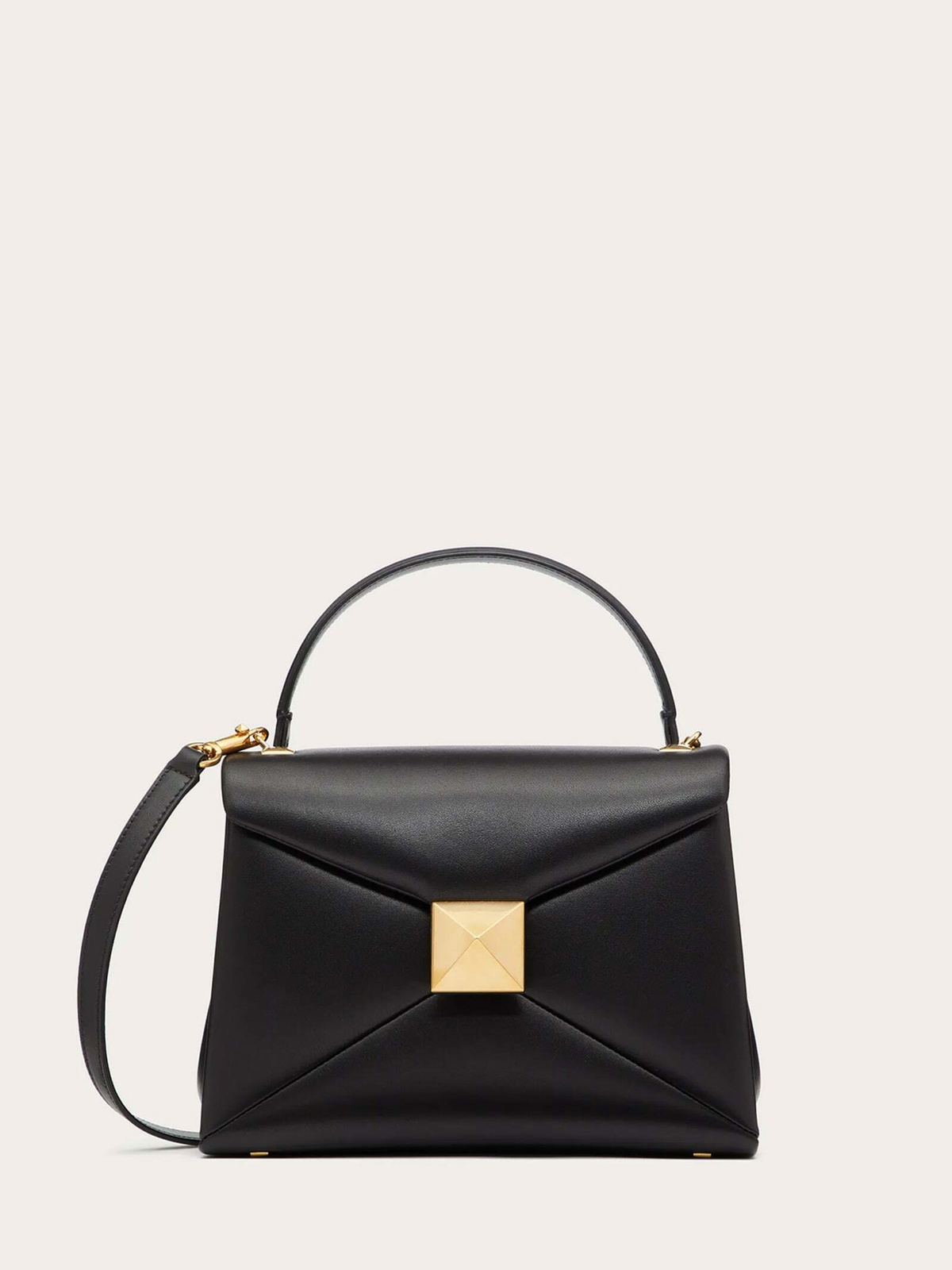
Valentino Designer Collection Sculptural Hardware

Rockstud v Rockstud Spike: Which One Is for You

Two lines sit on the same shelf with the same pyramid stud, and picking one costs somewhere between one thousand and two thousand dollars. The Rockstud and Rockstud Spike question, stated fairly, is that; small wonder so many buyers stall halfway through the decision. Their likeness is genuine, and yet they perform differently in the hand, in the wardrobe and on the resale market. One covers the everyday and the other the evening, and the price gap between them is not decorative. Set side by side here are the things that actually decide the outcome: what each costs at observed 2026 market prices, what materials each uses, what formats exist, and which survives contact with an ordinary week. Everything here is sourced from what is currently live, since both lines remain in the brand’s own bag filters in September 2026.

One motif, two price tiers

What unites them comes first, because it is why the comparison exists. Both are founded on the flat pyramid stud that has become the most recognisable hardware in the house’s leather goods, and both are current rather than archival. The point of divergence is tier. Rockstud claims the entry and lower-middle band, $1,250 to $2,100 at observed 2026 market prices; Rockstud Spike stands a full step above, at $2,400 to $3,700. What the gap tracks is a shift in materials, in size and in how dressed-up each line is asked to be, not a difference in studs. Rockstud is the motif in daylight, Rockstud Spike the motif in the evening; everything else tends to follow.

Where the stud began

Maria Grazia Chiuri and Pierpaolo Piccioli launched the pyramid stud in Fall 2010, during their period as co-creative directors of the house. Given that it began on footwear rather than handbags, the motif’s proportions make sense: the studs were designed to catch light on a curved surface before migrating onto flat leather panels. As a design reference the house cites bugnato rustication, the rough-cut stonework on Renaissance palazzo façades in Rome, fitting for a house whose creative headquarters is Roman. The chronology gets muddled online, so it is worth stating plainly: the motif appeared three years after Valentino Garavani retired from design in 2007, the studs were never his work, and he died in January 2026 having vltnshop.com/tote-bags had no ownership of the company since 1998. Widely repeated, the year the Rockstud bag launched rests on a single source, so doubt any confident date. Alessandro Michele has led creative direction since 2024, and both stud lines survived that transition intact.

Rockstud in 2026, the line that works for a living

The broader, more practical option of the two, Rockstud shows roughly fifty-two pieces observed live on the brand’s own site. Grainy calfskin anchors a palette that runs hard-wearing, with suede, raffia, laminated calfskin and pony-effect calfskin filling out the seasonal edges. What argues hardest for this line is that the formats are the everyday ones. Reckon on $1,390 for a mini shopping tote in grainy calfskin or suede, $1,490 in raffia, $1,750 laminated and $1,850 in pony-effect. Expect between $1,650 and $1,950 for a small valentino crossbody bag in grainy calfskin, $1,790 for the laminated version, and $1,950 in suede or $2,100 in grainy calfskin for a small valentino shoulder bag. Cheapest of all, outside the clutches, is a laminated calfskin wallet at $1,250.

Rockstud Spike in 2026: the dressed-up sibling

Softer, narrower and more expensive, Rockstud Spike is aimed at a different part of the week. Its observed palette shifts away from the grainy calfskin of the base line towards nappa, suede, kidskin and embroidered nappa, all more supple and less forgiving of scuffs. What dictates the pricing is materials rather than studs. Entry is a crossbody clutch at $2,400, with a small suede at $2,550 and a small nappa at $2,800, while medium sizes run from $2,750 to $3,200 in suede, $2,950 in kidskin and $3,500 in nappa, a medium embroidered nappa topping out at $3,700. The last figure is the instructive one: embroidery is where the line starts behaving like the top of the range rather than its commercial core. There is less choice here than on the base line, and the piece you want may simply not exist in the material you want.

Side by side on the numbers

Put side by side, the two lines show a pattern that is clean rather than subtle. A $300 gap divides the top of one from the bottom of the other, so the whole of the Rockstud range fits underneath the starting price of Rockstud Spike. One palette is chosen for wear and the other for drape, so materials tell the same story. A tote and a wallet come with the base line and not with the Spike; the Spike, for its part, offers a crossbody clutch that reads as evening. All figures below are observed 2026 market prices on the brand’s own United States site, not an official price list, and they move with material and season. The table charts the overlap between the two lines, and there is barely any.

Point of difference Rockstud Rockstud Spike
Observed US range, 2026 $1,250 to $2,100 $2,400 to $3,700
Cheapest example observed Laminated calfskin wallet, $1,250 Crossbody clutch, $2,400
Dearest observed piece Small shoulder in grainy calfskin, $2,100 Medium embroidered nappa, $3,700
Materials observed Grainy calfskin, suede, raffia, laminated calfskin, pony-effect Suede, kidskin, nappa, embroidered nappa
Formats seen Mini shopping tote, small shoulder, small crossbody, wallet Small and medium shoulder, crossbody clutch
Breadth of choice Some fifty-two pieces live Clearly narrower

Which one suits your week

The decision is generally settled by frequency of use rather than by taste. For a bag that goes to work, holds a phone and a wallet and survives rain twice a month, the grainy calfskin Rockstud is the sane answer, with the mini shopping tote as its most useful shape. Where the bag is for dinners, events and evenings that ask you to carry almost nothing, the Spike’s nappa and suede return a softer body and a richer surface, and the crossbody clutch is the format that earns its keep. Colour is another difference: suede and nappa hold saturated tones in a way grainy calfskin does not. There is also a navigation quirk worth knowing, in that the brand’s own United States site has no crossbody category page, listing bags instead under shoulder bags, totes, top handle bags, clutches, wallets and small leather goods. Most major retailers do maintain crossbody pages, but searching for a valentino crossbody bag on the house’s own site works better as a filter by size than as a category.

What the resale market says about each

Neither line is an asset; the numbers make that plain rather than encouraging. Across the house, roughly 41 per cent of retail is where one major resale platform put Valentino handbags in 2023, mid-tier and well below the strongest names. The motif bags do better than that average, and this is the useful part for anyone weighing these two. On that platform, observed retention records a Rockstud drawstring bucket at about 56 per cent, a Rockstud flip lock flap at about 56 per cent and a Rockstud pouch crossbody at about 50 per cent. What exists for the Spike is one illustrative data point and not a dataset, namely a medium example observed at roughly $1,700 second-hand against roughly $2,900 new, near 59 per cent but resting on one listing and not to be generalised. Read it practically: recognisability holds value here, both lines resell better than the quieter valentino bags, and the base line costs less to be wrong about.

In short

If this is your first valentino garavani bag or your only one, take Rockstud. It costs less, offers far more choice, uses materials that tolerate daily handling, and includes the two formats most people reach for: a tote and a wallet. Choose Rockstud Spike if you already own something from the house, want the motif in a softer material, and will carry the bag in the evening rather than on a commute. Do not buy the Spike expecting the base line’s durability, or the base line expecting the Spike’s drape: the material difference is the whole point of the price gap. If you are undecided and the budget stretches either way, spend the difference on a better colour and material within the base line rather than on the tier above. A bag people wear more is what that single move tends to produce, and how much it is worn is the only performance metric that survives contact with a wardrobe.

Women’s Spider Hoodie Retail Guide Center Information Buy Spider at Flat 60% off

Spider Shirt 555, decoded for 2025

The Spider Shirt 555 represents a graphic-intensive streetwear tee that draws fakes, fit issues, and pricing variations across seasons. You can purchase securely in 2025 by verifying build quality and labels, fitting numbers to your frame, and timing the market around drops, replenishments, and reseller drops. This manual breaks down the specific checks and tactics that consistently work.

This 555 artwork emerges in different palettes and production approaches across launches, which clarifies why universal “catch-all” guidance persistently lets down customers. Instead of memorizing photos, anchor your inspections on fabrics, threading, graphic chemistry, and seller provenance. Treat sizing as a dimension task, not a letter on the tag. For price, study latest benchmarks and the drop timeline instead of following the most vocal offer. The conclusion yields a buy that appears proper on day one and continues performing well after ten washes.

What’s the way to validate a real Spider Shirt 555?

Check the piece’s structure initially, then the labels and documentation, then the seller’s trail. Authentic 555 shirts display uniform threading, precise thick-ink or raised-print application, correct hue layering, and tags that match the launch and area.

Replica makers enhance images yet still reduce expenses on textile thickness, print composition, and finishing. Start with cloth sensation, progress to stitching and design boundaries under bright, raking lighting, and inspect interior branding for consistency in spacing and placement. Confirm the piece’s palette and SKU naming with brand announcements or reputable retailer records. Lastly, confirm the vendor’s refund policy, shipping origin, and transaction history that predates the listing.

What should tags, markings, and packaging show?

Authentic tees have a tidy constructed or marked neckline tag with uniform threading, readable text, and uniform spacing between rows. Washing tags appear clearly, avoid unraveling, and correspond to listed fabric makeup to the fabric hand-feel.

Inspect the neck tag boundaries for precise, balanced seam formations and zero adhesive leakage. Washing tags must feature care guidance that align with the design process; elevated-print artwork generally needs for reversed cold laundering and reduced temperature or air-dry. Barcodes or SKUs should not be basic; when included, they align with an established palette and dimension system approach. Wrapping appears tidy, not perfumed, young thug spider clothing website and all labels are aligned and printed cleanly without blurred boundaries. Inconsistent text styles between neckline and maintenance markings, offset branding, and irregular symbols constitute repeated warning signs on replicas.

Do the graphics and sensation satisfy the test?

Real 555 designs show crisp edges, solid colors, and uniform shine; raised-ink elevates evenly without pockmarks or pinholes. The garment’s textile usually seems medium- to thick-weight with a dense, consistent construction and firm side seams.

Trace a digit along the graphic’s borders; you must feel a consistent transition from fabric to color with zero gritty residue. High-density or puff zones bounce softly when compressed and don’t chip when flexed lightly. Inspect color overlaps where the pattern, numbers, and branding join—real pieces place levels accurately without haloing. Turn the tee inside out and look for little color seepage and minimal hard, artificial squares that indicate a low-quality transfer. The body ought to fall neatly from shoulder to bottom without rotating, an indication of proper knit alignment.

Can pricing alone expose a replica?

Price is a hint, not a conclusion. Extreme bargains seem questionable, but so do fear-creating spikes that lean on hype rather than benchmarks.

Scan a two-week window of listings sold, not just listed, to find a realistic range for your specific colorway and size. Extreme discounts from brand-new shops with stock photos are risky unless the seller can prove bills or earlier purchase background. Cyclical dips happen after large drops and just before major events, when merchants chase liquidity. Condition also clarifies range: mint-condition pieces run above lightly used, which itself beats flawed prints or stretched collars by a significant spread. Regular traders with lengthy backgrounds of confirmed sales deserve more confidence than shops with nothing before than yesterday.

Sizing: will a 555 garment match your body?

Most purchasers achieve their optimal result by gauging a beloved garment and aligning figures, not size letters. Expect slight contraction if the textile is pure cotton and not pre-shrunk.

Measure pit-to-pit, shoulder width, and back measurement on a garment you currently like. Compare to the seller’s garment dimensions, not a standard table. When the garment employs thicker material and a wide shape, you may experience a loose hang that appears more generous even at the same pit-to-pit. For 100% cotton jersey, prepare for approximately 2–4% shrinkage after the first wash unless tagged pre-processed; washing cold and line-drying handles most of it. If you’re between dimensions, the better option is fitting to your collar area, not your torso, because shoulder seams dictate how polished the tee looks.

The rapid-fit response and contraction truth

Choose the size that matches your shoulder width and armpit measurement from a garment you currently fit properly. Factor for small reduction on unprocessed fabric by preserving 1–2 cm buffer in breadth and dimension.

A garment that fits in the shoulder zone but stays moderately spacious in the torso appears intentional; a tee that’s constricted in the shoulder zone seems incorrect right away. If the listing provides item dimensions, emphasize them over “standard-sizing” claims, which vary by launch. For hybrid-fabric combinations, reduction typically runs less than all-cotton versions but still probable if heat-dried. If uncertain, request the vendor for flat-lay photos with a ruler across armpit width and from top point neckline to edge. Minor, checkable digits exceed company stories every time.

Gauge yourself and align the shirt

Employ a flexible tool to calculate shoulder width across your rear, torso dimension at the widest point, and preferred tee length from collar to edge. Change chest circumference into a target pit-to-pit by halving and adding ease.

For a regular fit, add roughly 5–7 cm of comfort to semi-torso; for a wide urban cut, include 7–10 cm. If your chest is 100 cm, you’ll seek 55–60 cm armpit span according to fall selection. Optimal tee length typically lands around center-fly for a proportioned shape; extended dimensions skew street, shorter measurements favor classic. Double-check arm dimension when you favor elbow-grazing sleeves; boxy cuts often deliver that directly from the package, while standard silhouettes won’t.

Textile, form, and drape explained

Denser fabric constructions hang more directly and appear more organized, while thinner weaves follow body contours and can look slimmer. Boxy cuts expand armpit width and decrease measurement for a trimmed, wide look.

When you desire a square silhouette that highlights the 555 graphic, prioritize underarm span and shoulder span over measurement. If you like a standard balance, look for longer back length and a reasonable underarm room. Collar dimension shifts the mood; elevated knit collars seem modern and hold shape better, but might appear constricting on wider necks. Pre-washed or garment-dyed pieces may seem gentler and slightly smaller on receipt due to pre-treatment—use measurements over markings to dodge surprises.

Where are the finest authentic bargains in 2025?

Monitor brand releases, licensed sellers, and reliable dealers during replenishments and post-excitement drops. Verify first, then negotiate.

Start with the brand’s announcement channels for drop coordination. Cross-reference with established stores renowned for verifying inventory; if a shop represents an authorized stockist for the company, you reduce the danger significantly. Through secondary markets, sort for vendors with a lengthy history of finished, authenticated sales. Worldwide listings sometimes land decreased rates after exchange shifts or local refills—include delivery, taxes, and refund difficulties into the amount. Bookmark searches for your particular colorway and size to snag discounted, newly listed items before they sell.

Cyclical scheduling and drop cycles

Optimal-price periods group right after large releases, mid-period, and right before annual-close when merchants liberate up capital. Prepare for cost strengthening right before festival seasons and fashion weeks.

Retailers clear inventory at period conclusions; that’s when odd fits or hues slip into reductions. Secondary costs frequently decline two to four weeks after a substantial drop as initial hype cools and flippers outbid each other. Celebration times may create reduction offers, but competition rises—set alerts early. Monitor colorways; neutral tones usually maintain value longer than loud seasonal colors, which encounter more substantial markdowns later.

Secondhand vs. original: what’s an appropriate number?

Mint-condition pieces commands the highest rate; carefully worn arrives at a measured discount if the design and opening are spotless. Stains near graphics and expanded openings force rates down sharply.

Seek sunlight pictures of collar flexibility, graphic face, underarm stitching, and hem shape. Micro-cracking in raised-ink is standard with use but should be uniform; flaking or missing chunks signals inferior pigment or thermal harm. A tidy wash history—cold cleaning, hang-dry—maintains worth far better than machine-dry cycles. For uncommon palettes, gently worn pieces can exceed damaged “fresh without marking” offers because state exceeds label claims. Always consider the reduction against repairability; collars don’t recover, but tiny spots distant from the design sometimes do.

Authentic vs. replica: side‑by‑side tells

Use the table to focus on regular, material distinctions that maintain during inspection. It’s created for rapid evaluations before you pay.

Check Real Marker Replica Tell Why It Counts
Collar tag Consistent seaming, clear type, consistent spacing and graphic density Worn borders, blurred print, inconsistent kerning or logo thickness Manufacturers reduce expenses on tags; text and polish show it
Print edges Crisp edges, minimal bleeding, even glossy/flat across colors Overspray, jagged borders, inconsistent gloss variations Proper screens and inks produce sharp, uniform coats
Elevated/dense-coat color Smooth rise, rebounds when compressed, consistent height Micro-openings, weak sensation, peels when curved lightly Color formulation and treatment temperatures are challenging to copy well
Material texture Medium/thick weave, solid edge threading, regular dye Weak, flimsy knit, spinning threading, inconsistent color Cheaper blanks telegraph standard instantly
Care label content Guidance corresponds to design method (inside-out, cold wash) Basic “hot laundering, heat dry maximum” regardless of design Mismatched care is a format tell
Packaging Clean odor, positioned labels, crisp typeface reproduction Intense scent, offset stickers, faded fonts Mass-farmed replicas rush finishing

“Specialist guidance: If you can’t inspect personally, request the seller for a quick clip that glides across the print edge in natural light at a shallow angle—poor color placement and haloing jump out on clips in approaches pictures could hide.”

Maintenance and durability: maintain the design, keep the shape

Launder inverted on cold, low spin; air-dry flat or minimal temperature; avoid direct ironing on artwork. These practices maintain raised-ink height, ink elasticity, and neckline durability.

Heat is the opponent of flexibility and design durability; tumble drying on high accelerates cracking and collar fatigue. Use a liquid cleanser without visual brighteners, which can fog richer hues. If a stain contacts the artwork, blot with a soft blend and never rub the design exterior. Place bent rather than hung to prevent neckline indentations on heavier knits. If you move, wind the tee with paper over the design to prevent pressure marks.

Danger signals that continue catching cautious buyers

Stock photos only, minimal piece numbers, and avoiding replies about return policies constitute transaction-enders. Rush text with “ultimate item, cost tomorrow escalates” is acting, not evidence.

A merchant who rejects sunlight images possibly masks hue drift or print problems. Worldwide offers with too-good-to-be-true pricing and zero taxes information frequently offset with minimal refunds. Washing tags that contradict the print technique indicate pattern usage. Unusual delivery locations versus the supposed merchant location deserve scrutiny. When unsure, move on; there’s perpetually another offer, and you simply need one great shirt.

Five overlooked facts about the 555 line

The “555” graphic has emerged throughout multiple drops and print executions, so there’s not a single “correct” puff lift—emphasize regularity within a piece rather than total weight; scheme names can vary between locations or merchants, which explains slight label or SKU distinctions without indicating a counterfeit; fabric jersey typically tightens marginally following the initial cleaning and then normalizes—arrange your fit for that opening small-reduction; piece-tinted versions may have slight shade difference panel-to-panel due to dye uptake differences, which constitutes typical for that process; reputable retailers archive item listings even after sellout—those cached pages are useful for confirming hue positioning and text.

Ultimate position: purchase wisely, not multiple times

Ground your selection on three factors: craftsmanship, numbers, and market timing. If a Spider Shirt 555 looks right beneath careful, directional illumination, aligns with your ruler figures, and sits within a confirmed cost range, you’re good.

Check seaming and designs before you grow excited by photos. Treat sizing as a figures game and keep a favorite tee’s measurements handy. Track drops and restocks so you’re purchasing during rational windows rather than excitement peaks. When you unite these processes, you get the shirt you wanted, at the rate you can support, and it keeps seems polished after months of wearing.

Zoccer Welcome Bonus Mechanics With Clear Wagering

Zoccer’s Welcome Bonus: How It Works For Real Players

Zoccer focuses heavily on its welcome bonus package, and the practical value comes down to how quickly you can unlock it, which games count, and what wagering rules you actually face. If you’re considering Zoccer for a first deposit, you’ll want to understand the bonus structure before you pick your slots or tables. In this article, we’ll break down the mechanics that shape your early bankroll and your realistic path from bonus activation to cashout.

To see how Zoccer presents the offer in its account flow, you can check the bonus page here: https://zoccer-casinos.org/ca.html.

Welcome Bonus Structure And What You Can Expect

Zoccer’s welcome deal is designed as a two-step promotion: a first deposit bonus that’s credited soon after confirmation, followed by an optional bonus booster for players who keep wagering within the offer window. The headline mechanics are straightforward, but the details matter—especially if you plan to play a mix of slots and live games. Zoccer typically groups eligible games into categories, so your experience won’t be “one bonus fits all” across the entire lobby.

In practical terms, you’ll usually see a bonus expressed as a percentage plus a fixed extra amount, with a clear maximum cap on the bonus bankroll. Zoccer also sets a time limit for completing wagering, so you’re not just managing volatility—you’re managing the calendar. If you tend to hop between game types, pay attention to which ones contribute to wagering and which ones may contribute less or not at all.

The best way to avoid disappointment is to activate the bonus only when you’re ready to play for a few sessions. Many players treat the welcome offer like a casual top-up; Zoccer’s mechanics reward more intentional play. Once you’ve confirmed eligibility and the bonus terms in your cashier area, you can plan your session around eligible slots for faster progress.

Wagering Requirements, Game Contribution, And Limits

Wagering rules are where welcome offers typically become either valuable or frustrating. Zoccer’s wagering requirement is applied to the bonus amount and any eligible bonus funds, and it’s usually calculated per the standard wagering model shown in the bonus terms. The big takeaway: your path to cashout depends on both the total wagering target and the contribution rate of the games you choose.

How Slots And Live Games Affect Bonus Progress

On Zoccer, slots generally provide the most consistent contribution toward wagering. That doesn’t mean live casino never helps, but live roulette or blackjack often has different contribution rules than slot reels. If your goal is to clear wagering efficiently, you’ll likely spend more time on slots with higher contribution eligibility. If you love live dealer games, treat them as part of your entertainment budget, not your primary wagering engine.

Contribution Caps, Stake Limits, And Cashout Conditions

Another practical factor is stake limits. Zoccer may impose a maximum stake per spin or per round while the bonus is active, which prevents players from trying to “speed run” wagering with very large bets. There can also be contribution caps—situations where even if you keep wagering, only a portion counts until you meet the cap logic. Finally, cashout conditions typically require that you reach the wagering target before any bonus funds can be withdrawn.

Because these limits are tied to the offer terms, your best strategy is to read the wagering and stake rules before you start. If you see a low maximum stake, choose a game bankroll size that stays within the cap, otherwise your session can stall even if you feel like you’re playing hard.

Choosing Your First Games On Zoccer With Bonus In Mind

If you want the welcome bonus to work for you, you need a game plan that matches how Zoccer counts wagering. For many players, the simplest approach is to start with slots that are clearly eligible and then add variety once the bonus is moving. If you prefer live casino, pick one or two live games you enjoy and keep your stakes within the bonus limits, using slots to handle the bulk of the wagering progress.

Also consider volatility. A bonus session that’s too aggressive can burn through your bankroll before wagering is complete, especially if the bonus time window is short. Zoccer’s offer is best suited to players who can commit to a structured session—checking the bonus progress, staying within stake rules, and adjusting game selection when wagering contribution changes.

Finally, watch for “bonus activation friction.” If you wait too long after depositing, you may miss the activation timing or the window for promo completion. For a smoother first session, activate the bonus promptly, then build a routine around eligible games and a realistic wagering target.

Zoccer’s welcome bonus can be a strong early value option if you treat it like a mechanics-first challenge: understand wagering, respect contribution rules, and play within any stake limits and timeframes. If you prefer spontaneous, mixed play with large bets, the offer may feel restrictive. For players who plan their first sessions around eligible slots and steady wagering, Zoccer can fit well.

Приложение Pin Up Игровой Каталог И Лобби Краткая Оценка

Приложение Pin Up: как устроен игровой каталог и что важно в лобби

Приложение Pin Up делает акцент на том, как быстро вы находите нужные игры и как удобно проводите время в лобби. Если вам важны понятные фильтры, быстрый доступ к слотам и живым столам, а также стабильная работа на телефоне, это направление стоит рассмотреть особенно внимательно. Ниже разберём, как именно устроен каталог, как подбираются провайдеры и почему порядок в лобби напрямую влияет на игровой темп. посетите приложение Pin Up

Лобби Pin Up: быстрый вход в нужный формат игры

В приложении Pin Up лобби организовано так, чтобы вы не тратили минуты на поиск. Главные категории вынесены в верхнюю навигацию: слоты, live-казино, настольные игры и разделы с тематическими подборками. Дизайн в целом визуально спокойный: карточки игр читаются на экране смартфона, а элементы интерфейса не перегружают. Важная практическая деталь — быстрый переход между режимами без «петляния» по меню: вы выбираете формат, уточняете предпочтение и сразу попадаете в список.

Для ориентации в каталоге предусмотрены фильтры и сортировки, которые помогают сузить выбор по ключевым признакам: популярные, новые, рекомендованные, а также по провайдерам. Если вы любите стабильный ритм и повторяемость, вам будет проще вернуться к знакомым разработчикам. Если же вы любите экспериментировать, сортировки по новинкам и тематическим подборкам ускоряют знакомство с релизами.

Отдельно стоит отметить логику открытия игры: карточка содержит достаточно информации, чтобы понять, чего ожидать от механики и визуального стиля, не уходя глубоко в детали. В результате вы быстрее принимаете решение — играть сейчас или продолжить подбор. Это особенно заметно в мобильной сессии, где любое лишнее действие снижает вовлечённость.

Игровой каталог Pin Up: провайдеры, слоты и живое казино в одной логике

Игровой каталог Pin Up построен вокруг сочетания массовых слотов и контента live-казино, чтобы игрок мог менять темп, не перестраивая привычки. В слотах обычно легко найти и классические линейки, и видеослоты с бонусными механиками, прогрессивными элементами и сюжетными темами. Live-секция подходит тем, кто предпочитает атмосферу стола: здесь логично искать рулетку, блэкджек и вариации карточных игр, а также игры с ведущими и активным взаимодействием.

Провайдеры представлены так, чтобы покрыть разные вкусы: от «исторически узнаваемых» брендов до студий, которые делают акцент на прогрессивных фичах и визуальных эффектах. Внутри каталога это отражается в том, что карточки игр и их группировка помогают быстро выбрать стиль: хотите больше динамики и бонусных раундов — идите к соответствующим подборкам; хотите более «ровные» сессии — выбирайте игры, где понятна частота событий и привычные механики.

Отдельный плюс — удобство открытия игры с последующим возвратом в список. Вы не теряете контекст: если вам понравилась конкретная механика или провайдер, следующий выбор делается быстрее, потому что лобби сохраняет логику навигации. Это снижает «трение» и помогает поддерживать темп, особенно когда вы переключаетесь между слотами и live.

Фильтры и поиск в Pin Up: как ускорить выбор, не теряя интерес

Когда в каталоге много позиций, выигрывает не тот, у кого «больше игр», а тот, кто помогает быстро выбрать. В приложении Pin Up фильтры и поиск работают как практичный инструмент для сужения круга. Если вы знаете провайдера или тему, вы быстрее находите нужные варианты. Если же вы хотите начать «с вдохновения», сортировки по популярным и новым помогают поймать актуальные релизы и игровые хиты.

Особенно полезна настройка под сценарий: короткая пауза перед работой — значит, вам важны быстрые слоты с понятным стартом; вечерняя сессия — значит, хочется живого формата и игр, где решения принимаются прямо в процессе. Лобби Pin Up поддерживает оба сценария, потому что не заставляет выбирать между «удобством» и «разнообразием»: вы просто переключаете акцент и продолжаете играть в том же приложении.

Важно и то, что интерфейс не требует постоянной перестройки: вы можете пройти путь «категория → фильтр → список → игра» и затем вернуться к тому же контексту. В итоге каталог воспринимается как единая система, а не набор разрозненных разделов.

Кому подойдёт приложение Pin Up по игровому каталогу и лобби

Приложение Pin Up особенно хорошо ложится на игроков, которые ценят скорость выбора и ясную организацию контента. Если вы часто чередуете слоты и live-казино, вам понравится логика лобби и возможность быстро переключаться без потери контекста. Также это хороший вариант для тех, кто любит пробовать разные провайдеры, но не хочет каждый раз начинать поиск «с нуля». Если же вы предпочитаете максимально глубокие настройки и максимально узкие параметры, возможно, потребуется чуть больше времени на подбор в рамках доступных фильтров.

В итоге Pin Up делает ставку на удобное лобби и управляемый каталог: вы быстрее находите формат, который подходит настроению, и сохраняете темп сессии. Для мобильного игрока это критично — лишние клики раздражают, а здесь навигация подталкивает к игре. Если вам важна не только механика, но и то, как быстро вы до неё доходите, приложение Pin Up стоит попробовать.

Reseña del casino Colbert: bonos, juegos y pagos

Reseña del casino casino Colbert: bonos, juegos y pagos

Esta reseña está enfocada en pagos y uso práctico. La idea es que puedas evaluar qué tan fácil es depositar, jugar y retirar en Colbert, sin depender de promesas vagas. Revisamos cómo suelen funcionar los bonos, qué tipos de juegos hay y qué métodos de pago están disponibles, junto con límites y tiempos orientativos.

Descripción general de el casino Colbert y cómo opera

Colbert es un casino online orientado a jugadores que quieren una experiencia directa: registro sencillo, sala de juegos amplia y un sistema de bonos con requisitos claros. El sitio muestra categorías por tipo de juego (tragamonedas, mesa en vivo y ruleta/blackjack) y permite filtrar por proveedor cuando está disponible. La navegación es razonablemente simple tanto en escritorio como en móvil, con secciones visibles para promociones y historial de transacciones.

En cuanto a soporte, suele haber un canal de atención al cliente por formulario o chat, y también es común encontrar una página de preguntas frecuentes para temas de verificación y retiros. Como en la mayoría de casinos, para retiros puede ser necesario completar verificación de identidad antes o después del primer retiro, dependiendo del importe y del método usado.

Bonos disponibles en Colbert: términos y límites

Colbert maneja bonos de bienvenida y promociones recurrentes. Los términos pueden variar según el país y el historial del jugador, pero estos son los esquemas más comunes que el sitio muestra en su sección de promociones.

Promoción Detalle principal Requisito de apuesta Límite típico
Bono de bienvenida 100% hasta 200€ en el primer depósito x35 sobre el bono Máx. 200€ de bono
Bono sin depósito 10€ en créditos promocionales Sin requisito de depósito x20 sobre el bono
Promoción semanal Reto de recarga con premio en saldo x25 sobre el premio Máx. 50€
Cashback mensual 5% de pérdidas netas mensuales Canje automático Tope 30€

Un punto práctico: en bonos con requisito de apuesta, normalmente se indica qué juegos cuentan y cuáles tienen contribución parcial. En el casino Colbert, las tragamonedas suelen tener contribución completa, mientras que algunos juegos de mesa pueden contar a un porcentaje menor. Revisa siempre la tabla de contribución dentro de la promoción antes de acumular volumen, para evitar que el bono quede “atascado”.

También es habitual que los bonos tengan límites de retirada. En la práctica, muchos casinos permiten retirar solo el saldo generado una vez que se cumple el requisito de apuesta. Si el bono incluye saldo promocional, ese saldo normalmente no se puede retirar directamente hasta que se convierta en saldo jugable tras completar los términos.

Catálogo de juegos: tragamonedas y mesas en vivo

El catálogo de Colbert se divide en tragamonedas, juegos de mesa y una sección de ruleta/blackjack para quienes prefieren partidas rápidas. La oferta tiende a incluir títulos populares de distintos proveedores, con variedad de temas y volatilidades. En tragamonedas, puedes encontrar desde máquinas de apuesta baja hasta opciones con multiplicadores altos.

En juegos de mesa, es común que haya ruleta (europea y americana, según disponibilidad), blackjack con reglas estándar y versiones con variantes de apuestas. El live suele mostrar mesas con crupier en directo y opciones de apuestas típicas (rojo/negro, pares/impares, columnas y docenas en ruleta). Si juegas con un presupuesto ajustado, vale la pena revisar el rango de apuestas mínimo/máximo por mesa, porque puede cambiar según el juego y la demanda.

Para tragamonedas, la recomendación práctica es filtrar por RTP o volatilidad cuando el sitio lo permite. Aunque no siempre se muestra con detalle, en muchos listados aparece la información básica del juego. Esto ayuda a elegir si buscas sesiones más largas o partidas con picos de pago.

Pagos en el casino Colbert: métodos, tiempos y verificación

Esta sección es la parte más importante para la mayoría de jugadores. Colbert suele ofrecer varios métodos de depósito y retiro, con opciones de banca electrónica y tarjetas. La disponibilidad exacta puede depender del país, pero normalmente se ven métodos como tarjetas (crédito/débito), transferencias y monederos electrónicos.

Método Tiempo estimado de retiro Mínimo de retiro Notas comunes
Tarjeta 1 a 5 días hábiles 20€ Puede requerir verificación
Transferencia 2 a 7 días hábiles 50€ Usual para importes mayores
Monedero electrónico Instantáneo a 2 días 10€ Depende del proveedor
Cripto (si está disponible) 1 a 3 días 20€ Red y confirmaciones variables

En retiros, el tiempo real puede variar por validaciones de seguridad. Colbert suele pedir verificación de identidad para retiros: documento de identidad (por ejemplo, pasaporte o DNI) y prueba de domicilio si el perfil lo requiere. Si ya completaste verificación para el bono, a veces se reutiliza la información; en otros casos, piden confirmación adicional.

Sobre límites: además del mínimo de retiro, algunos casinos aplican un máximo diario o por solicitud. En Colbert, el máximo típico de una solicitud suele estar en torno a 2.000€ para tarjetas y 5.000€ para transferencias, aunque puede variar según el historial del usuario y el método elegido.

También conviene saber que, si usaste un bono, el retiro puede estar condicionado a completar el requisito de apuesta. Si intentas retirar antes de cumplir términos, el sistema puede bloquear la solicitud hasta que el saldo promocional se libere o se convierta.

Pros y contras de el casino Colbert para jugadores habituales

Aspectos positivos

  • Bonos con requisitos definidos y límites claros, lo que reduce sorpresas.
  • Métodos de pago variados y tiempos de retiro generalmente razonables según el canal.
  • Catálogo equilibrado: tragamonedas abundantes y mesas en vivo para sesiones cortas.

Aspectos a considerar

  • La verificación puede ser necesaria para retirar, incluso si depositaste con éxito.
  • En bonos, no todos los juegos pueden contribuir igual; hay que revisar la tabla del bono.
  • Los límites de retiro y la velocidad pueden cambiar según el método y el país.

Consejos prácticos para evitar problemas con bonos y retiros

Si quieres que tu experiencia sea fluida, sigue estas pautas: primero, lee los términos del bono antes de apostar y confirma qué juegos cuentan. Segundo, si planeas retirar, completa verificación de identidad cuanto antes para no frenar el proceso. Tercero, prueba con un retiro pequeño una vez cumplidos los requisitos, especialmente si estás usando un método nuevo. Por último, guarda capturas o el historial de transacciones por si el soporte necesita revisar detalles.

Con estos puntos, Colbert suele funcionar bien para jugadores que buscan control y claridad en el proceso de pagos, además de un catálogo variado para alternar entre tragamonedas y mesas.

Preguntas frecuentes sobre Colbert y sus retiros

¿Cuánto tarda un retiro en Colbert?

Depende del método. En general, las tarjetas pueden tardar de 1 a 5 días hábiles, mientras que monederos electrónicos suelen ser más rápidos (instantáneo a 2 días). Transferencias suelen estar en 2 a 7 días hábiles.

¿Necesito verificar mi cuenta para retirar?

Es común que sí. El casino Colbert puede pedir verificación antes o después del primer retiro, especialmente si el importe es alto o si el sistema lo detecta por seguridad.

¿Los bonos permiten retirar dinero directamente?

Normalmente no de forma inmediata. En la mayoría de promociones con saldo promocional, debes cumplir el requisito de apuesta para liberar el saldo y poder retirarlo.

¿Qué juegos cuentan para el requisito de apuesta?

Las tragamonedas suelen contar con contribución completa, pero los juegos de mesa pueden tener porcentaje menor. Revisa la sección de términos del bono para ver la tabla de contribución.

¿Cuál es el mínimo de retiro?

El mínimo típico varía por método: por ejemplo, 10€ para monederos electrónicos y 20€ para tarjetas o cripto, mientras que la transferencia suele tener mínimo más alto, como 50€.

¿Puedo retirar al mismo método con el que deposité?

En la mayoría de casos, sí. Muchos casinos requieren que el retiro se haga al mismo método utilizado para el depósito principal, al menos hasta cierto punto, para cumplir políticas antifraude.